
What is the best weapon on the 33 Immortals tier list?
The best entry on a 33 Immortals weapon tier list is the weapon you can execute while dodging, reviving, reading boss tells, and staying with the raid. A high-damage option is not S-tier for your run if it makes you miss objectives or abandon allies.
For beginners, start with a stable weapon that gives you clean timing and safe positioning. For experienced players, high-skill weapons such as Crossbows of Pride or Glaive of Temperance can be stronger when you understand their resource rhythm. The official Pride and Temperance update described Crossbows as rapid ranged DPS built around Brand and follow-up hits, while Glaive rewards patient spacing and control.
Treat tier lists as snapshots. Updates can add weapons, tune enemies, change progression, or make weapon mastery more important. The better method is to pick a main weapon for one role, test relics around that role, then upgrade traits that solve a repeated problem: survival, boss burst, horde control, revive safety, or objective uptime.
Keep the boundary clear: this page ranks 33 Immortals weapon roles, not unrelated Expedition 33 searches.
Use a role-based comparison: execution, upgrade path, relic fit, and revive safety matter more than a permanent tier label.
The best first weapon is the one that keeps you alive and useful. The best long-term weapon is the one whose upgrades, relics, and mastery rewards match the role you repeatedly play in raids.
33 Immortals weapon tier list by raid role
Use this table as a decision aid, not as a permanent tier list. Values and names can change across patches, so the safest guide pattern is to compare jobs, risks, and upgrade priorities.
| Weapon or style | Best fit | Main strength | Watch out for |
|---|---|---|---|
| Safe starter weapon | New players learning enemy tells, revives, and raid flow | Consistent timing and less panic when the screen is crowded | Do not stay on a safe pick forever if your team needs boss damage or range |
| Crossbows of Pride | Ranged players who can aim under pressure and prioritize marked targets | Brand rewards accurate follow-up hits and can create strong burst windows | Missing key shots lowers value; tunnel vision can make you late on revives |
| Glaive of Temperance | Methodical players who like mid-range melee spacing | Rewards patience, positioning, and controlled resource use | Poor spacing reduces damage and can put you too close to boss attacks |
| Horde-control setup | Rooms with many enemies and objective pressure | Keeps lanes clear so the raid can move and revive safely | May feel weaker against single-target boss phases without matching relics |
| Boss-burst setup | Players who know boss tells and save damage for punish windows | Turns clean openings into progress before the arena collapses | Greedy burst attempts often cost more damage than they create |
How to choose your weapon without chasing a bad tier list
Start with execution before damage
A theoretical top weapon is not top-tier if you cannot use it while dodging, reviving, and following objectives. Run several sessions with one weapon and ask whether you are dying less, helping more, and reaching bosses with resources intact.
Match the weapon to your raid job
33 Immortals rewards group value. If you naturally stay near allies, choose upgrades that improve revive safety, control, or reliable area damage. If you play around boss windows, build for burst and positioning rather than random bonuses.
Use official update notes to reset assumptions
When Thunder Lotus adds weapons or changes progression, old advice can become stale. Recheck official patch notes, update posts, and store descriptions before treating any best weapon claim as final.
Weapon upgrades, mastery, and relic synergy
Upgrade repeated actions
Prioritize traits tied to actions you actually use every run, not traits that sound strong but rarely trigger for your playstyle.
Pair relics with a role
Relics are strongest when they reinforce a clear plan such as ranged pressure, heavy attacks, revive support, or boss punish windows.
Retest after patches
Weapon mastery and meta progression have changed during updates, so keep notes by patch instead of relying on one old route.
A good 33 Immortals weapon upgrade path starts with one practical question: what problem ends your runs? If you die while greedily attacking, survival and spacing upgrades are worth more than raw damage. If your raid reaches boss phases but fails to finish, burst windows, heavy attacks, and relic timing may matter more. If rooms collapse because nobody clears pressure, control and uptime become the priority.
Mastery and upgrade systems are also where players often overfit. Do not spend everything just because a community post says a trait is strong. Test whether the trait changes your actual decisions. A strong upgrade should make your normal loop cleaner: engage, dodge, help, reposition, and punish.
When you search how to upgrade weapons in 33 Immortals, follow the upgrade path shown by the current game and official update notes. Prioritize a trait that fixes your repeated failure—survival, range, control, boss burst, or revive safety—before spreading resources across every weapon.
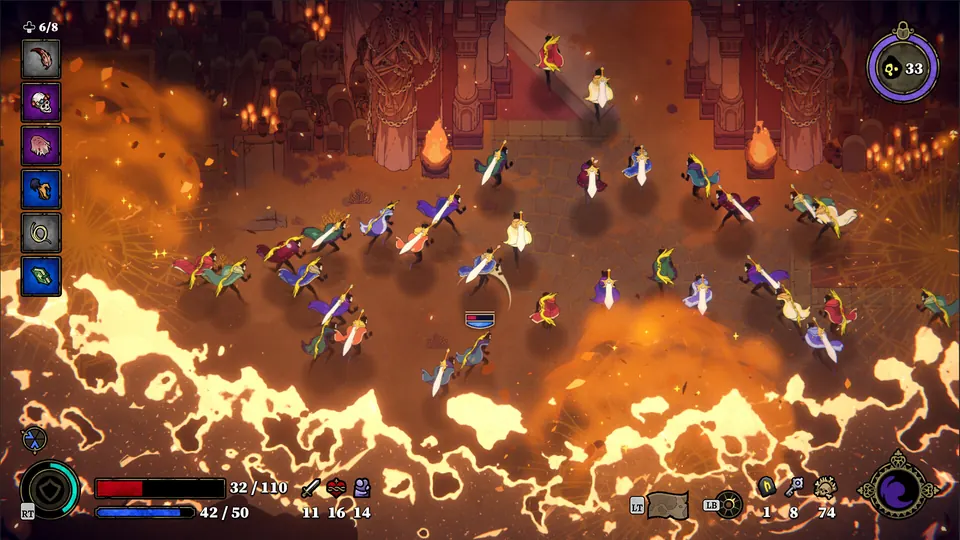
Build examples for real raid situations
These are role-based examples, not guaranteed meta builds. Use them to organize relics, powers, and weapon upgrades around a clear purpose.
Beginner survival build
Choose a stable weapon, favor upgrades that reduce risky timing, stay near the group, and use relics that help you live long enough to revive others. This build is ideal while learning bosses and arena objectives.
Ranged mark-and-burst build
Use a ranged weapon such as Crossbows of Pride when you can consistently mark priority targets and follow up. Pair with relic choices that reward accuracy, uptime, or burst windows, then avoid drifting so far away that you miss team support.
Controlled melee build
A methodical melee weapon such as Glaive of Temperance benefits from spacing discipline. Build around timing, controlled resource use, and safe punish windows rather than button mashing.
Objective control build
When the raid needs room stability, choose weapons and upgrades that keep enemies controlled around objectives. Damage still matters, but the real value is making the map readable for everyone else.
Staff of Sloth control build
Staff of Sloth fits players who prefer control over burst. Use Echoing Orbs to create safer space, apply Lethargy to slow pressure, and choose relics or upgrades that reward repeated orb hits, survival, and objective uptime. Treat this as a control example, not a guaranteed best-in-slot build.
Read the full Staff of Sloth control build, relic priorities, and positioning guide.
Read the full Hooks of Gluttony parry, relic priority, and co-op build guide.
Match those weapon choices with the 33 Immortals relics guide.
Watch the official weapon update context
The Pride and Temperance update is the clearest official example of how new 33 Immortals weapons are designed around different player behaviors. Watch the official developer video, then return to the table above to decide whether high-skill ranged or controlled melee fits you.
Common weapon mistakes to avoid
- Changing weapons every run before learning the dodge, heavy attack, and ability rhythm of one main weapon.
- Following a tier list without checking the patch date or whether it was written before new weapons were added.
- Building only for personal damage while ignoring revives, objectives, and group positioning.
- Using a high-skill weapon in public raids before you can execute its core mechanic under pressure.
- Spending upgrade resources without knowing whether the trait fixes a repeated weakness in your runs.
Sources checked
- Official Steam listing - Used for official wording on weapons, relics, powers, builds, co-op, and platform facts.
- Thunder Lotus 33 Immortals site - Used for first-party game description and progression framing.
- Pride and Temperance dev diary - Used for Crossbows of Pride and Glaive of Temperance mechanics and design intent.