Short answer: Empathy is a support signal, not a raw damage stat
In 33 Immortals, treat Empathy as a support-oriented keyword until the current in-game tooltip gives you the exact live wording. Players search for “what does empathy do in 33 Immortals” because the term sounds important but is easy to misread. The safe interpretation is that Empathy belongs with choices that affect team survival, revive value, ally interaction, or supportive perk logic rather than simple weapon damage.
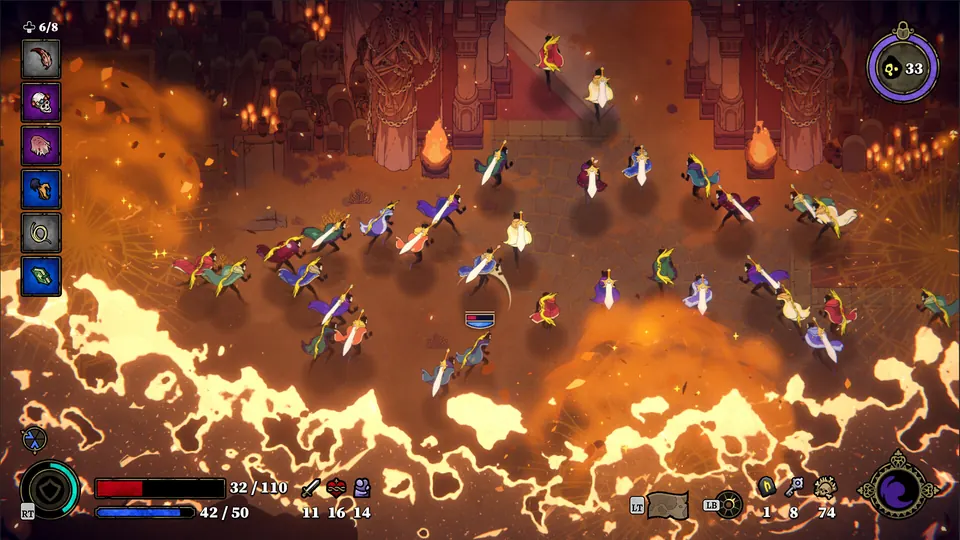
That matters because 33 Immortals is not a solo damage race. The game is built around 33-player co-op, instant matchmaking, revives, pings, emotes, weapons, relics, permanent upgrades, hordes, and boss fights. If a perk or upgrade mentions Empathy, ask what team problem it solves: keeping allies alive, recovering after a bad phase, rewarding helpful play, or improving a support loop. Do not rank it as best-in-slot only because the name appears in a community list.
This page is intentionally cautious. Official public pages explain the co-op roguelike structure, but public store pages do not always expose every live tooltip, number, or patch-level perk value. Use this guide to decide when Empathy is worth considering, then confirm the exact current effect in the in-game compendium, reward screen, or patch notes before spending scarce upgrade resources.
Pick Empathy when your runs fail from missed revives, scattered positioning, or weak team recovery. Skip it when your build needs a clear damage, range, or boss-burst upgrade and the tooltip does not directly help that job.
How to read Empathy without overclaiming
The safest way to evaluate Empathy is to read the surrounding choice, not the word alone. A support keyword can be powerful in the right run and almost invisible in the wrong role.
Read the trigger
Check whether Empathy activates on revive, ally proximity, healing, support action, damage taken, or another team event.
Match the run problem
Choose it if your group is losing control during rescue windows, objective pressure, or boss recovery phases.
Compare the opportunity cost
If another option directly improves your weapon loop or boss damage, Empathy must solve a real team issue to win the slot.
When Empathy is useful in a 33-player run
Use this table as a decision aid for support value. It does not replace the live tooltip, but it helps you decide whether an Empathy choice belongs in your build plan.
| Situation | What it suggests | How to play it | Main risk |
|---|---|---|---|
| Public matchmaking with many downs | Your group needs recovery value more than personal greed. | Stay near allies, watch revive windows, and use Empathy only if it helps the rescue loop. | Taking support perks while still ignoring positioning wastes the slot. |
| Boss phases with repeated collapses | The raid may be losing to failed resets rather than low damage. | Pair Empathy with safer weapon timing and avoid chasing damage during danger tells. | If the boss only needs more burst, a support keyword may be too slow. |
| Coordinated party of friends | Support effects can be easier to trigger because your party can plan around them. | Tell your party what role you are building for: revive safety, sustain, control, or recovery. | Stacking too much support can leave the party short on clear speed. |
| Solo queue learning runs | Empathy can be a learning-friendly pick if it rewards helpful habits. | Use it to practice staying in range, reacting to downs, and reading group movement. | Do not use it as an excuse to avoid learning weapon execution. |
Build choices that pair naturally with Empathy
Empathy makes the most sense when it reinforces a role. It should not be a random perk you take because the name sounds cooperative.
Revive-safe support
Choose consistent weapon timing, survival upgrades, and effects that help you reach fallen allies without dying beside them.
Objective stabilizer
Pair support value with horde control so the raid has room to move, rescue, and reset during crowded rooms.
Boss recovery route
Use Empathy-style choices when boss attempts fail because the team cannot recover after a bad tell or arena mistake.
Common Empathy mistakes
Treating Empathy as a universal best perk
A support keyword can be excellent in revive-heavy runs and mediocre in damage-check situations. Judge it by the current run problem.
Ignoring the exact tooltip
Patch changes can alter values, trigger rules, or perk wording. Always confirm the live in-game text before making a permanent conclusion.
Taking support without changing behavior
Empathy-style value usually requires team-aware play. If you still drift away from allies or miss revive windows, the build will not show its strength.
Replacing core weapon learning
Support choices are not a shortcut around dodge timing, attack rhythm, positioning, and boss tells. Learn the weapon first, then support the raid better.
Sources checked
- Official Steam listing - Used for official game framing around co-op, weapons, relics, permanent upgrades, and platform facts.
- Official 33 Immortals website - Used to verify first-party positioning and avoid unsupported fan claims.