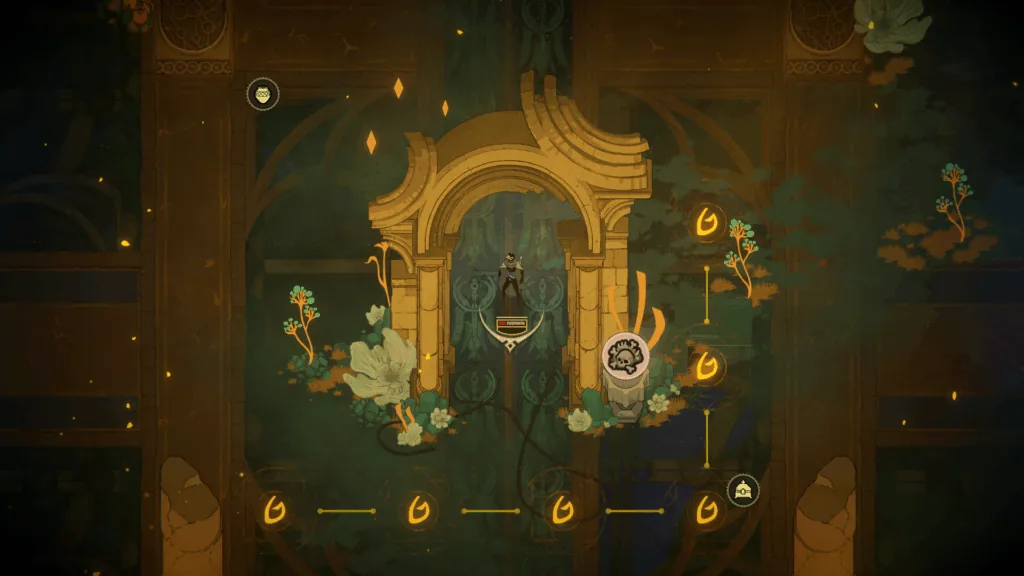
How does the 33 Immortals map work?
A 33 Immortals map is a run-specific navigation problem rather than a fixed open world. Realm layouts use recognizable objective types, but routes, chamber positions and useful branches can vary. Open the map after each major objective, confirm where the raid is gathering, then choose the next destination by reward value, travel time and current survival pressure.
The safest map habit is to move with a useful cluster of players. A side route may contain a chamber, chest or event, but the value disappears if the detour leaves too few players for revives or delays the group before a timed objective. Use teleports and the Ascension Point as regrouping tools, not merely landmarks.
This page targets map and route intent only. Builds belong in the weapons and relic guides, progression upgrades belong in the Constellation guide, and release timing belongs in the roadmap. That boundary keeps the advice practical and avoids turning one map page into a shallow general wiki.
Read the map in loops: objective, reward check, regroup, then commit. Do not chase every branch simply because it is visible.
Inferno, Purgatorio and Paradiso map planning
Community map documentation describes multiple layout variants and different chamber counts by realm. Treat exact counts as patch-sensitive; use the table as a route-planning model and verify the current run on your map.
| Realm | What changes | Best route priority |
|---|---|---|
| Inferno | The opening realm teaches the main loop with a comparatively readable route and fewer decision branches. | Stay grouped, learn marker meanings, and avoid losing time on low-value backtracking. |
| Purgatorio | More branches and larger spaces make missed chambers, late regrouping and isolated deaths more costly. | Set a direction early, use teleports deliberately, and reassess after each chamber or elite encounter. |
| Paradiso | Later-run pressure makes every detour compete with survival, boss readiness and team density. | Favor high-confidence rewards, protect revive capacity, and reach the Ascension Point with a coherent raid. |
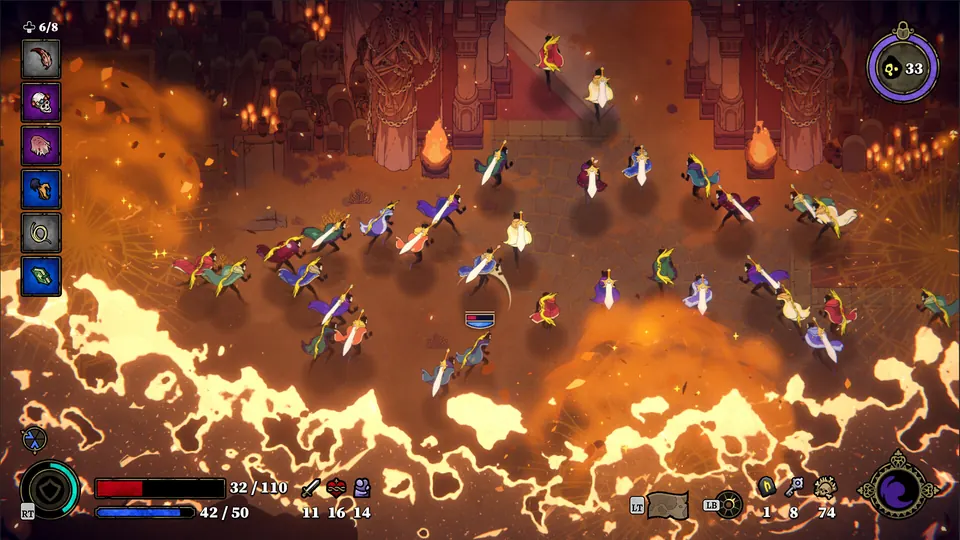
A practical map route for every run
Start by identifying the main objective line and the nearest high-value side activity. A good route is not the path with the most icons; it is the path that converts travel into power without creating a weak, scattered raid.
Reopen the map after a chamber, major fight or teleport. The tactical situation changes as players die, revive, split or finish objectives. A route that was efficient two minutes ago may become a bad choice if the strongest group has moved elsewhere.
- 1. Anchor on the main objective. Know which direction advances the realm before taking a side branch.
- 2. Choose one nearby reward loop. Prefer chambers, sigils or events that can be completed without a long isolated return path.
- 3. Watch player density. If the route empties behind you, stop extending the detour and reconnect with the larger group.
- 4. Use teleports to repair splits. Teleport movement is most valuable when it restores raid cohesion before difficult combat.
- 5. Prepare for Ascension. Arrive with enough health, revives and teammates rather than treating the final approach as another loot sweep.
Map markers that should change your route
Marker names and icons can evolve, but these objective categories remain useful for decisions.
Chambers
Treat chambers as concentrated reward opportunities. Enter when enough players are nearby to finish efficiently and recover from mistakes.
Sigils and progression objectives
Prioritize them when they unlock the run's next stage or materially improve access to later content.
Teleports
Use them to cut dead travel, reconnect separated groups and shorten the return from optional branches.
Ascension Point
This is a commitment point. Finish essential preparation first, then gather instead of arriving in scattered waves.
When should you explore instead of regroup?
Explore when the branch is short, the reward is visible or strongly expected, and nearby players can support the encounter. Regroup when the path is uncertain, the raid has already split, revive capacity is low, or the next objective punishes late arrivals.
Interactive community maps are useful for learning chamber locations and realm variants, but they should support the in-game map rather than replace it. The current run, current patch and current team position remain the final authority. Community resources may also lag behind new updates, so verify newly released realm content against first-party notes.
The strongest players create information for the group: they ping a clear destination, wait at meaningful junctions and avoid dragging half the raid into a low-value corner. Map knowledge is therefore a co-op skill, not just memorization.
Common 33 Immortals map mistakes
- Following an outdated static route without checking the current layout.
- Splitting from the raid for a low-confidence reward and losing revive support.
- Ignoring teleports until after a long backtrack.
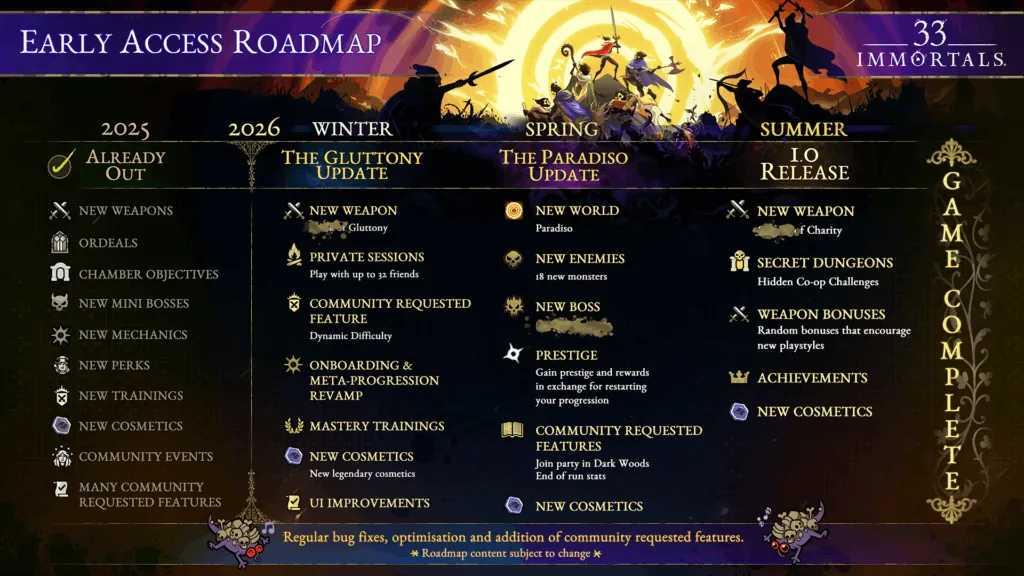
- Confusing the content roadmap with an in-run realm map.
- Treating every visible icon as mandatory before Ascension.
- Using a community map without checking its realm variant or update date.
33 Immortals map FAQ
Is the 33 Immortals map randomized?
Layouts use recurring realm rules and objectives, but community documentation identifies multiple variants. Plan around the current in-game map rather than assuming one fixed route.
Is there an interactive 33 Immortals map?
Yes. Community projects provide interactive realm maps. Use them as secondary references and verify the active run, patch and realm variant in game.
How many chambers are on each map?
Community map references list realm-dependent chamber ranges, but exact counts and locations can change with variants or updates. Check the current map and the source's update date.
What should I do before using an Ascension Point?
Finish essential nearby rewards, restore health and revive capacity where possible, then regroup. Avoid sending isolated players into the next stage in separate waves.
Should I explore every side path?
No. Explore when the route is short and supported; regroup when travel risk, time or team separation is greater than the likely reward.
Sources and map references
- 33 Immortals Wiki: Map — Community documentation for map variants, realm sizes, chambers and interactive-map references.
- 33immortals.fr interactive map guide — Community interactive map covering Inferno, Purgatorio and Paradiso.
- Thunder Lotus 33 Immortals press kit — Official media source used across this independent guide site.