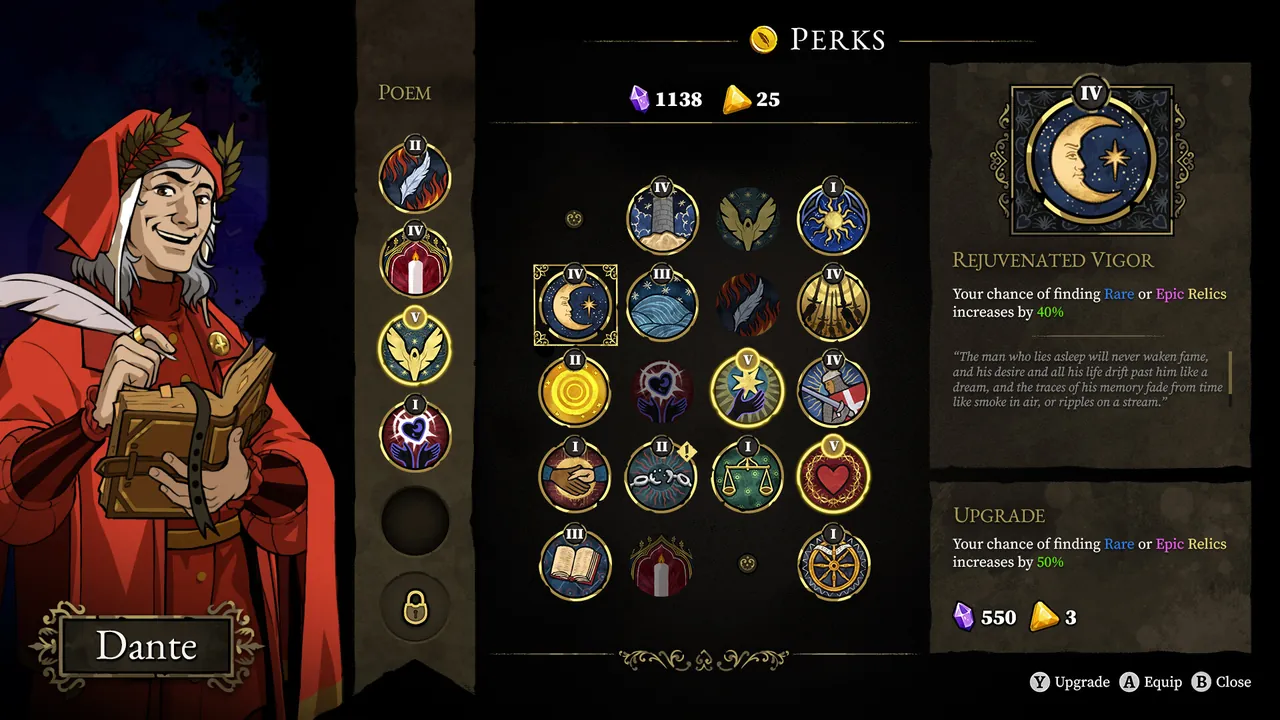
What is the Constellation in 33 Immortals?
The 33 Immortals Constellation is permanent progression that improves consistency between runs. Fix survival, recovery, resource, or revive problems first; add specialized damage after normal runs become stable.
Similarweb shows a distinct opportunity: 33 immortals constellation has 1,310 recent global volume at Difficulty 1. The narrower Inner Fire phrase has 70 at Difficulty 7, so it belongs as a supporting section rather than a competing page.
Spend for the problem that ends most runs. Choose durability before bosses if the team dies early, then move into weapon-compatible offense.
How Constellation progression works
Treat every resource as part of one coherent route.
- 1
Earn permanent resources
Complete runs, objectives, and Major Feats according to the current client rewards.
- 2
Read the path
Check later nodes before buying a cheap unlock whose condition rarely matches your weapon.
- 3
Test the result
Use several runs to confirm that the same failure point becomes less common.
- 4
Specialize later
After the foundation is stable, branch into boss damage, control, relic quality, or support.
Costs and node wording can change. Verify the current game client instead of copying an old screenshot.
Bright Stars and Major Feats
Official 1.0 information connects Major Feats with Bright Stars and new Constellation upgrades. Pick goals that fit your weapon and party role without abandoning revives or objectives.
Saving for a meaningful breakpoint is often better than scattering resources across unrelated cheap nodes.
Survival route
Health, recovery, revive safety, and defensive consistency.
Damage route
Repeatable conditions triggered naturally by your weapon.
Economy route
Resource and reward-quality upgrades after late-run access is reliable.
Best Constellation upgrade order
Use this as a decision framework, not a permanent tier list.
| Stage | Priority | Why | Avoid |
|---|---|---|---|
| First clears | Health, healing, reliable resources | Creates more useful attempts and learning time. | Boss-only bonuses before survival |
| Stable runs | Weapon-compatible damage and cooldowns | Shortens dangerous rooms and phases. | Rare trigger conditions |
| Ordeal preparation | Revive safety, control, team utility | Higher pressure punishes selfish builds. | Judging only personal damage |
| Late specialization | Rarity, economy, challenge branches | Pays off after the core path is complete. | Buying every cheap branch |
Where Inner Fire belongs
Inner Fire is a run-facing effect term. Permanent upgrades may support the actions that generate it, but Inner Fire is not the Constellation itself.
Check how stacks are gained, what benefits from them, and whether your weapon triggers the condition often enough before investing around it.
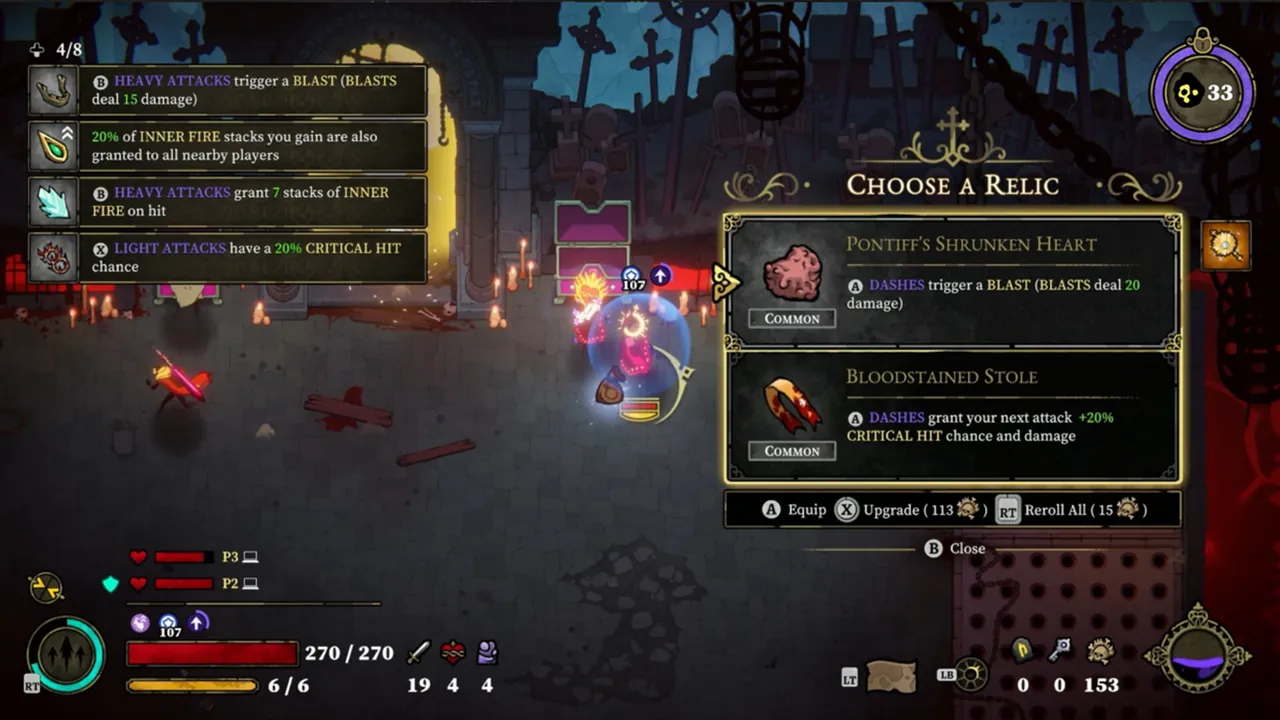
Constellation upgrades persist between runs; relic and Inner Fire effects usually describe the current run.
How Feats and Ordeals support progression
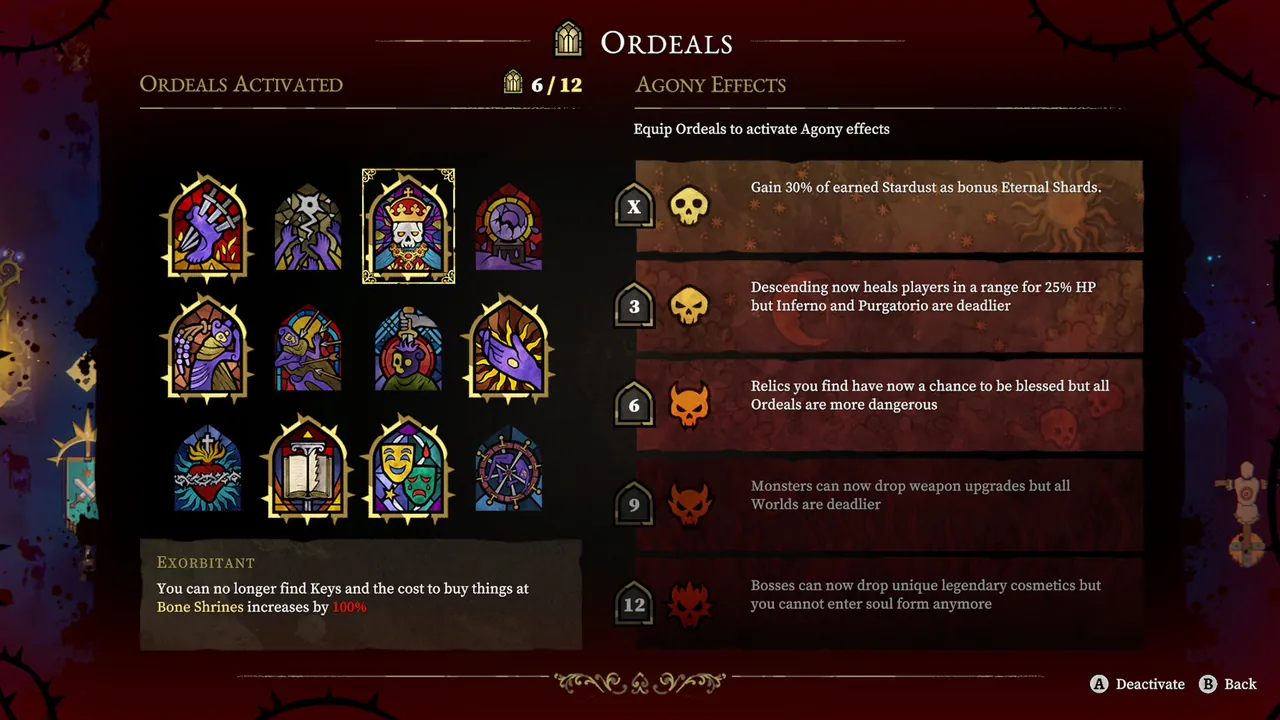
Major Feats feed longer-term goals, while Ordeals add optional run pressure. This page covers permanent unlock priorities; the Ordeals guide covers surviving Agony effects.
Choose one realistic goal before queueing. Protect the clear instead of forcing an unsafe objective when party composition or route does not support it.
Common mistakes
Copying an old tier list
Balance, costs, and wording change; use current in-game conditions.
Spreading resources
Finish a coherent path before opening unrelated branches.
Ignoring the team
Damage does not replace revive safety, control, and positioning.
Confusing temporary power
Judge Constellation value by what remains for the next run.
Official sources and media
- Official Steam store page - Release status and official screenshots.
- Official Steam news hub - Current update and progression context.
- Thunder Lotus press kit - First-party game media.